| Optical SETI Map | Conferences Map | Illustrations Map | Photo Galleries Map | Observations Map | Constructing Map |

|
Laser Guide Stars
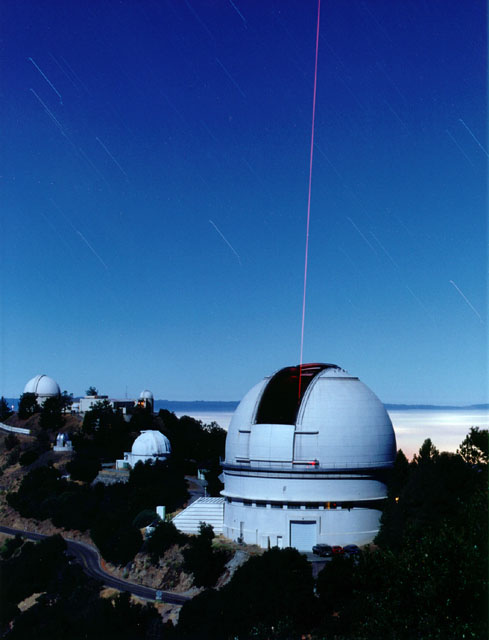
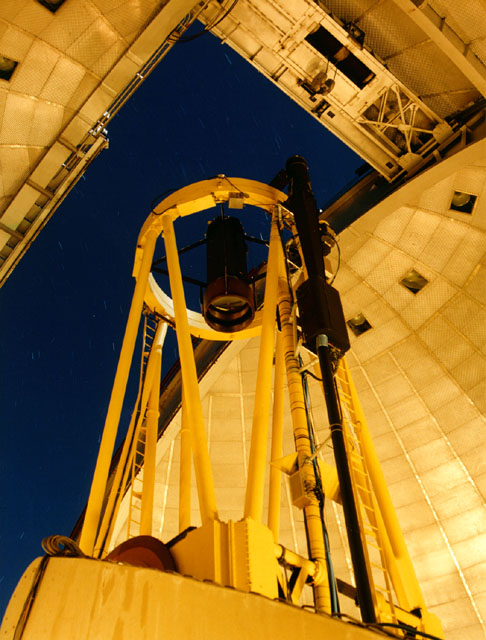
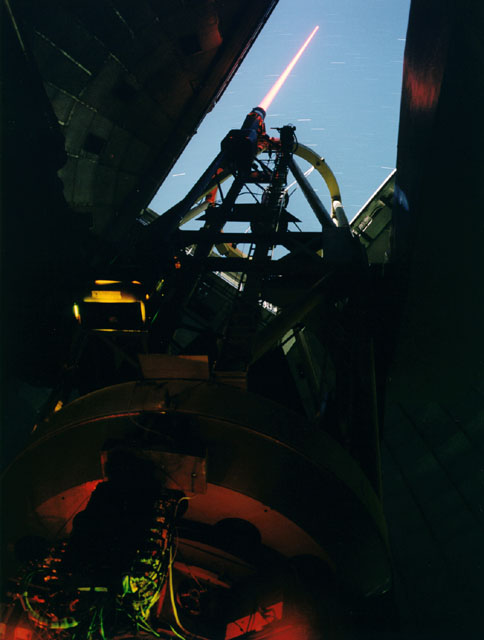
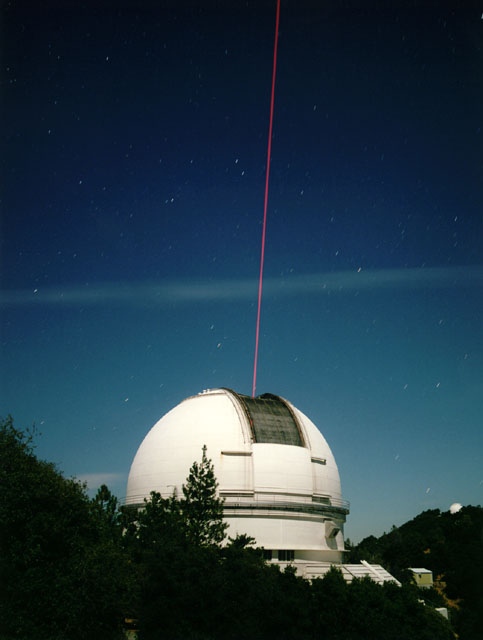
A laser guide star is beamed out the open dome of Lick Observatory atop Mt. Hamilton,
east of San Jose, Ca., in the first ever test of a laser guide star combined with adaptive
optics on a large astronomical telescope. The laser reflects off the sodium layer in
the upper atmosphere, at an altitude of 60 miles, thus creating a manmade guide star.
The star serves as a focal point for a computer-driven membrane-thin mirror with
127 individual actuators glued to the back of it - tiny plungers that can adjust minute
portions of the mirror 50-100 times per second to counteract the effects of atmospheric
turbulence. In so doing, the system combines Hubble Space Telescope-like clarity
with the power of large land-based telescopes to give astronomers their best view yet of
the cosmos.
| ||||||