| Optical SETI Map | Conferences Map | Illustrations Map | Photo Galleries Map | Observations Map | Constructing Map |

|
The Search For Extraterrestrial Intelligence (SETI) In The Optical Spectrum: A ReviewProceedings of SPIE's Los Angeles Symposium, OE LASE '93, Vol. 1867, The Search for Extraterrestrial Intelligence (SETI) in the Optical Spectrum, Los Angeles, California, January 21-22, 1993, pp. 75-113.
Sections:Abstract
Copyright ©, 1993, Fiberdyne Optoelectronics
Stuart A. Kingsley
ABSTRACTThis paper suggests that the microwave rationale behind modern-day SETI lore is suspect, and that our search for electromagnetic signals from extraterrestrial technical civilizations may be doomed to failure because we are "tuned to the wrong frequencies". The old idea that lasers would be better for interstellar communications is revisited. That optical transmissions might be superior for CETI/SETI has generally been discounted by the community. Indeed, there is very little in the literature about the optical approach, as its efficacy was more or less dismissed by SETI researchers some twenty years ago. The main reason that the laser approach to SETI has been given a bad "press" is the assumption that ETIs lack the skills to target narrow optical beams into selected stars. This assumption of ineptitude, is shown to be erroneous, and calls into question some aspects of the rationale for Microwave SETI. The detectability of both continuous wave and pulse visible/infrared laser signals is described in some detail.
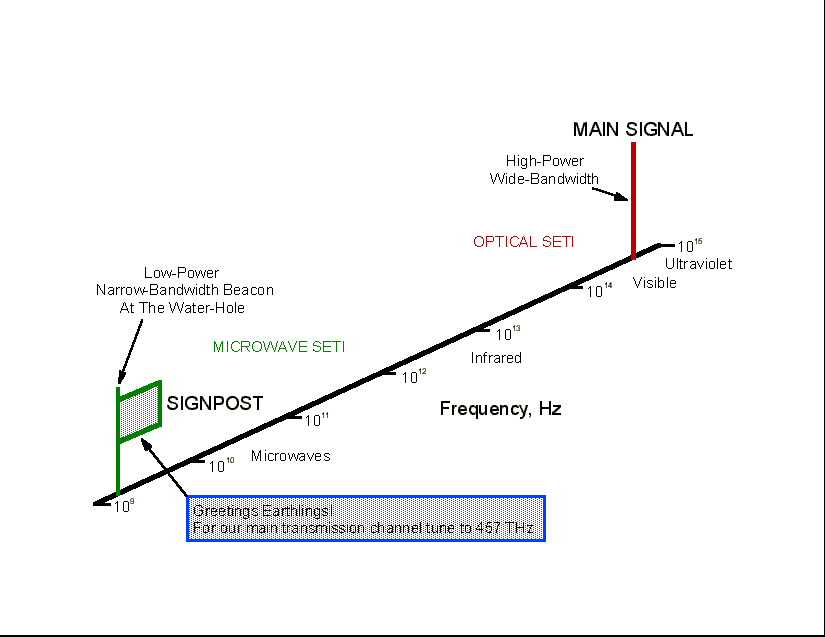
1. INTRODUCTIONThis paper suggests that the modern Search for Extraterrestrial Intelligence (SETI)1-48,112, which was initiated by Cocconi, Morrison1,13,and Drake (Project Ozma)2,3,13 is being conducted in the wrong part of the electromagnetic spectrum, i.e., that SETI receivers are presently "tuned to the wrong frequencies". This paper revisits a subject first discussed by Schwartz and Townes49-50 thirty two years ago and subsequently investigated by the late Shvartsman54,58,62, Ross51-53,55,57,71, Connes56, Zuckerman60, Betz61,66, Beskin58,67, Sherwood63, and Rather.65 According to the modern broader definition of the word "optical", the wavelength regime embraced covers the region between 350 nm in the ultra-violet up to the far-infrared wavelengths of 1,000,000 nm, where the millimeter-wave band starts. Our Milky Way galaxy contains about 400 billion stars. We assume, as does most of the SETI community, that at any time there are perhaps thousands or tens of thousands of technical civilizations (the Drake Equation)2-40 within our own galaxy. There should be at least a reasonable chance that at any time, one such civilization might be signalling in our direction from within a sphere several thousand light years in radius. The volume of space within a sphere of two thousand light years in diameter contains about ten million stars, one million of which may be capable of supporting life. One of fundamental reasons for proposing the idea that the optical approach to SETI is superior, is that the sign of a mature technical civilization is not to waste power over empty space, but to use refined signalling techniques in preference to brute force. Although some authors have suggested that optical ETI signals would appear in the form of bright flashing points of light, this author thinks it very unlikely. The idea that such signals will be like heliographs or semaphores, sending out intense beams at Morse Code rates, is not one that should be seriously contemplated. As will be shown, there is no need to modulate the entire output of a star in order to be detected across the galaxy.20,33 Of course, just as on this planet, where there are a variety of communication techniques employed, depending on distance, bandwidth, technologies and materials available, there is no reason to assume that there is only one universal communication frequency or spectral regime employed by ETIs. Different applications and environments will lead to the optimization of different technologies, so that there may be many so-called "magic wavelengths or frequencies". If the reader does not believe that advanced extraterrestrial technical civilizations would have the wherewithal to aim tight optical beams into neighboring stars, then they need read no further. In correspondence with the author, Dr. Bernard Oliver, Deputy Director of NASA's SETI Office, (and presenter at this conference) has put it very strongly that ETIs would not have this capability. This viewpoint has dominated SETI rationale for several decades, and in the author's opinion, is somewhat responsible for the "bad press" that the optical approach has received. It is the author's view that the capability to target tight optical beams is probably much easier to achieve than developing relativistic or near-relativistic spacecraft. The same large optical antenna array capability which would allow ETIs to produce narrow transmitter beams would also allow them to "view" planets orbiting nearby stars. Over millennia they will have developed catalogs for the stars in their vicinity, describing their peculiar proper motions, with full details of each star's planetary system. For them, the ballistic skills (point ahead targeting) required to land photons on a designated target, over the equivalent of twice the light time distance, will be relatively trivial. This is not to discount the possibility that ETIs may send out space probes to nearby planetary systems to gather information directly. There is a concept inherent in the conventional SETI rationale which might best be termed "Signpost SETI". This says, that the signals we are looking for in the microwave spectrum, may only be monochromatic beacons or acquisition carriers, and that the main transmission channels for extraterrestrials are elsewhere. This is illustrated in Figure 1. If this is the case, we might find a narrow-band modulated microwave signal that tells us to tune to some place in the optical regime, and perhaps provide the "Rosetta Stone" for decoding the wideband optical channel. However, it is not clear why extraterrestrials would spectrally separate these signals into two different wavelength regimes.
Both the monochromatic beacon and the main wideband transmission channel could be side-by-side in the optical spectrum. Indeed, there would be good signal processing advantages for using what we terrenes would call a "pilot-tone technique", particularly for reception within an atmosphere. With a pilot-tone beacon, the differential Doppler Shift and Chirp (Drift) would be reduced by the ratio of the optical carrier frequency to that of the difference frequency, i.e., a ratio of the order of 10-8. It would also reduce noise effects from the phase and frequency jitter on the transmitter laser and the receiver local-oscillator laser. Such pilot-tone techniques can reduce the effect of transmitter and local-oscillator laser phase-noise and correct for phase-noise and wavefront distortion produced by Earth's atmosphere, allowing more efficient reception with large heterodyning telescopes, i.e., reduced signal fading and improved the mean SNR.99,110 At the best astronomical observatories in the world, the spectral power in atmospheric turbulence is confined below 30 to 50 Hz. Pilot-tones could remove these fluctuations, and also allow for the implementation of Maximal Ratio Predetection Diversity110 reception using a photodetector array99. There is something quite philosophically appealing about the pilot-tone technique. It satisfies the conventional SETI rationale for the need of a "Signpost", while at the same time provides the means for more efficiently detecting the main wideband ETI channel from within a planetary atmosphere. In this paper, we refer to Professional Optical SETI as that using large telescopes, i.e., of the order of 10-meter diameter, while Amateur Optical SETI would employ significantly smaller apertures. Another difference between the two kinds of Optical SETI is that while the former could employ either coherent or incoherent optical detection techniques, the latter is reserved for incoherent detection due to its complexity and cost (see the complementary companion paper for further details).73
2. PROJECT CYCLOPSIn this paper, many references are made to the Project Cyclops5 study and the effect that it has had on SETI thinking over the past two decades. Table 1 is taken from that report, which illustrates this author's view that Cyclops has been at least partially responsible for the lack of interest in the optical approach to SETI after the early 1970's. The data is taken from Table 5-3, page 50, of the July 1973 revised edition (CR 114445) of the Project Cyclops design study of a system for detecting extraterrestrial life. This study was prepared under Stanford/NASA/Ames Research Center 1971 summer faculty fellowship program in engineering systems design. Note that at the time the Cyclops study was done, the field of "optoelectronics" (photonics) was in its infancy. Thus, what the Cyclops study called "optical" is really a superset of the visible to far-infrared spectrums. In this Optical SETI paper, we have already stated that the word "optical" covers the entire spectrum from ultra-violet to the far-infrared. For Table 1 only, we retain the original definition of the word "optical" as employed by Barney Oliver in his Cyclops report.
A infrared systems are
essentially state-of-the-art (for 1971). The performance of the above modelled 1.06 m m and 10.6 m m systems has been severely compromised by restricting the transmitters and receivers to ground-based operation within terrestrial-type atmospheres, and limiting beamwidth to 1 second of arc. Note that atmospheric coherence cell size is about 20 cm at l = 0.5 m m, and is proportional to l 6/5.
The first column A is the most revealing in this comparison table, in that it models an ETI transmitter at the Nd:YAG (Neodymium: Yttrium-Aluminum-Garnet) laser wavelength of 1,060 nm, that has an aperture of 22.5 cm! These figures have been highlighted in the upper left area of the table. As can be seen, in the Cyclops analysis, the onus for detecting a strong signal was placed at the receiver end of the system, where by definition, the technology available would generally be far inferior to that at the transmitter. The resulting huge multi-mirror receiving telescope system is thus incredibly expensive, and the optical systems don't perform as well as even the 100-meter diameter microwave dish system. The performance of the 1.06 m m and 10.6 m m systems modelled in the Cyclops study have been severely compromised by restricting the transmitters and receivers to ground-based operation within terrestrial-type atmosphere, and limiting beamwidths to one second of arc. The atmospheric coherence cell size (ro) is about 20 cm (8") at l = 0.5 m m, and is proportional to l (6/5). In the infrared at 10.6 m m, ro can be as large as eight meters. The A infrared systems are essentially state-of-the-art for 1971. The B infrared systems are futuristic for 1971. If we assume that the 1 ns pulses have a repetition rate of one per second in the case of the first 1.06 m m Nd:YAG system (Optical System A), the average power is only a modest 1 kW. One does wonder though, what a peak power of 1 Terrawatt (1,000 GW), producing a peak Effective Isotropic Radiated Power (EIRP) of 4.4 X 10²³ W would do to a 22.5 cm diameter transmitting mirror, or to the air contained within the telescope! Barney Oliver confuses the issue by suggesting that in order for Optical SETI with tightly focussed diffraction-limited transmitter beams to be possible and sensible, we humans must have the capability to do that today. As we know, "SETI" is about the passive act of listening for signs of extraterrestrial intelligence. For CETI (Communications With Extraterrestrial Intelligence), we are now much closer in time to be in a position to transmit strong gigawatt-type optical signals across the galaxy than we are to the Industrial Revolution. This is practically no time at all on the Cosmic Time Scale. Perhaps SETI is one way to take those Strategic Defense Initiative (SDI) "swords" on both sides of the now defunct Iron Curtain and turn them into CETI "plowshares"! However, for the moment, no one is suggesting doing CETI. As a result of an exchange of comments at the conference between Dr. Barney Oliver and Dr. David Latham concerning present-day knowledge of stellar motions, Barney revised upwards his estimate of the maximum usable uplink gain given in his conference paper, from 25 X 106 to 25 X 108; a figure still substantially below what is obtained for his very pessimistic 22.5 cm aperture model of the twenty-year old Cyclops Report (Gain = 4.4 X 10¹¹). According to Dr. Oliver's present thinking, he readily throws away about a factor of about 400,000 (56 dB) in the gain potential of visible ETI uplinks (for 10-meter transmitters, Gain ~ 1015) because he still ascribes to ETIs the technical capabilities of late 20th Century Earth! We can be sure that within the next fifty years we will have obtained data on the peculiar proper motions of nearby stars to correctly aim (point ahead target) narrow optical beams. We presently have lasers powerful enough for the job, but don't know how to aim them precisely, or where to aim them. It is conceivable that if we do receive an optical ETI signal, and successfully decode its message, we might find that it contains the relative peculiar proper motion data to allow us to reply with a directed, narrow beamwidth, wideband signal. This would in reality be no different to acquiring the knowledge and skills to build the ETI "machine" featured in Sagan's novel Contact.19
3. ASSUMPTION OF INEPTITUDEUnfortunately, despite declarations to the contrary, many SETI activists have been very anthropocentric and have in the main assumed that ETIs are technically inept. The "Assumption of (Technical) Ineptitude" (private discussions between the author and Clive Goodall), not to be confused with the "Assumption of Mediocrity"5-40 applied to our own emerging technical civilization, has caused a gross under-estimate of the technical prowess of ETIs, e.g., their capability to aim very high-power tight beams into the life zones of nearby stars. The onus will be on them to transmit the strongest signal with their planetary, stellar or nuclear-pumped orbital lasers. It is humbling to remind ourselves that just one century ago, very few people on this planet used electricity. We have come a long way in a short time! Yet, in the space of one hundred years, we have been able to send astronauts to the Moon, robot probes to other planets, and deploy a large space telescope in Earth orbit. Despite the very unfortunate technical problems that have plagued the 2.4-meter aperture Hubble Space Telescope (HST), we should note that being representative of state-of-the-art terrene technology, it has a designed angular resolution of 0.043" and a designed pointing accuracy of 0.012".74-77 In 1961, just after the invention of the laser and only two years following Cocconi and Morrison's1 classic paper which initiated modern SETI, Schwartz and Townes49-50 (of laser fame) suggested that in other societies, laser communications technology may have been developed before microwave communications. From looking at the development of technology during the Twentieth Century, it is probable that the development of microwave and laser technology must occur within a short time of each other. As Schwartz and Townes implied, another society, having developed laser technology first, might cultivate a SETI rationale which was based on the superiority of laser communications over its radio frequency counterpart. It may only be a historical accident that the science of SETI on this planet became so dominated by radio astronomers. Even Townes and his colleagues49-40,59-61 have been somewhat constrained in their imagination by limiting beam divergences to be greater than about one second of arc. A uniformly illuminated diffraction limited ten-meter diameter carbon dioxide (CO2) transmitter has a Full Width Half Maximum (FWHM) beamwidth equal to 0.22 arc seconds (see Table 2), so that even this system has a beam that is slightly too narrow by their definition. Note that more recently, Betz66 has reduced the technical limits on minimum beam divergence to 0.1 arc seconds. When we decide what might be technically feasible in one hundred, one thousand, or ten thousand years, the only thing which should constrain our imagination are the laws of physics as we presently know them. We are reminded that mere decades ago, the idea of geosynchronous communication satellites and men walking on the Moon was considered science fiction.
4. PROFESSIONAL OPTICAL SETIIn this paper, the model employed for the Professional Optical SETI analysis is based on a very modest normalized continuous wave (cw) transmitter power of 1 kilowatt (1 kW) over a range of ten light years. As a modelling convenience, it assumes symmetrical systems, i.e., that the receiver aperture is identical to that of the transmitter. This symmetrical modelling technique is one often adopted by previous comparative analyses. In reality, because by definition ETIs will be older and more technically mature civilizations, if and when we do detect ETI, it will be found that the alien transmitters are huge compared to our own puny receivers.
Assuming that an optical heterodyning receiving system is used for Professional Optical SETI, an optical pre-detection filter is not really required because of the excellent background noise rejection inherent in such systems. In practice, such a receiver would at least be duplicated for the detection of two orthogonally-polarized or circularly-polarized signal components. This optical heterodyne receiver might well use a dye local-oscillator (L.O.) laser that has very narrow linewidth (< 5 kHz), and which is tunable across the entire visible and near-infrared regimes. The intermediate frequency (I.F.) bandwidth of such a system could be as high as 10 GHz. The optical detection system would consist of an array of PIN or avalanche photodetectors (APDs), say 128 X 128 pixels. The idea is that the image of a star would be centered on the array, and if there should happen to be an ETI transmitter around that star, transmitting in our direction, then the signal photons will fall somewhere within the array area. The L.O. laser would "illuminate" all the photodetectors (pixels), either simultaneously or sequentially. The output of each photodetector might be taken to a single 10 GHz Multi-Channel Spectrum Analyzer (MCSA) which sequentially samples all 16,384 photo-detectors in the array, or there might be one MCSA for every row or for every photodetector, leading to substantial reductions in search time. For several practical reasons, e.g., Doppler de-chirping, it is likely that the alternative coherent detection technique called "homodyne detection", which is essentially equivalent to a heterodyne system with a zero I.F., would not be used for the frequency search, though it might be employed after acquisition of an ETI signal.
Table 2 is the author's equivalent of the Cyclops Study comparison table, but the conclusions drawn are very different. The model for the optical systems is based on the use of a heterodyning receiver as described above. For discussions about Professional Optical SETI heterodyne receivers, we will often refer to the term Signal-To-Noise Ratio (SNR) in a generic manner as a means of denoting signal detectability. In such cases, what we really mean is Carrier-To-Noise Ratio (CNR), as the measurement is taken at the intermediate frequency (I.F.) before electrical demodulation (detection) of the signal. In the material on Amateur Optical SETI photon-counting receivers in the companion paper,73 we will be dealing with the post-detection Signal-To-Noise Ratio, so it is more accurately denoted by the term SNR.
FWHM = Full
Width Half Maximum (3 dB beamwidth), 1 Astronomical Unit (A.U.) = 1.496 x 10¹¹
m., * Signal-To-Planck/Daylight
Ratios assume polarized starlight and background, and no Fraunhofer dark-line suppression
(typically 10 to 20 dB).
Communication engineers know that it is often expedient to normalize the CNR or SNR to a 1 Hz electrical bandwidth; a bandwidth which is thought to be substantially smaller than the minimum bin bandwidth required for actual SETI observations with Professional Optical SETI receivers. This allows us to subtract 10 dB from the CNR (SNR) for each decade increase in electrical bandwidth. For instance, a CNR (SNR) of 94 dB re (with respect to) 1 Hz is equivalent to 19 dB re 30 MHz, a figure arrived at by subtracting 10.log(30 X 106) from 94 dB. We shall be referencing these particular numbers again later. A bandwidth of "1 Hz" has a special significance to Microwave SETI researchers. It is often the minimum bin bandwidth employed to analyze the received signals as dispersion effects and Doppler chirp rates in the low microwave region, i.e., around 1.5 GHz, would spread the most monochromatic of signals to that order. Table 2, Line 30 shows the maximum equatorial ground-based chirp near the so-called "water-hole", due to Earth's rotation to be about 0.17 Hz/s. Thus, it is important to realize that for this Optical SETI analysis, the 1 Hz bandwidth is used just for the convenience of normalizing the SNR. It does not imply anything about the ideal electrical (I.F.) or post-detection bandwidth. Note that in this study, it is generally assumed that the optical pre-detection bandwidth is at least twice the electrical or post-detection bandwidth. It is also useful to normalize the signals to a certain link length. Here we have chosen 10 light years, since it is a convenient distance, corresponding approximately to the nearest stars. It is then simple to derate the received signal strengths by 20 dB for every factor of ten increase in range. One major reason why the SETI community generally discounts the optical approach is the considerable amount of quantum noise generated by optical photons. As we increase frequency, the number of photons for a given flux intensity progressively falls, i.e., the photons become more energetic, so that there is a noise component "hf" (h = Planck's constant, f = frequency) associated with the statistics of photon arrival times, which exceeds the thermal "kT" (k = Boltzmann's constant, T = temperature) noise. If Bif is the electrical bandwidth, it is assumed that sufficient photons arrive in the observation or measurement time 1/Bif, for Gaussian and Poisson statistics to apply. In practice, this means that about ten photons have to be detected during each measurement interval. For the photon-starved situation at small and negative SNRs, the (analog) SNR values are somewhat meaningless. The effective noise temperature of the 656 nm system modelled in this paper is 43,900 Kelvin, considerably more than the 10 K of the microwave system. However, it is the potential enormous transmitter gain capability of optical antennas which can more than make up for this 36 dB reduction in sensitivity (36 dB increase in the noise floor). In terms of mean transmitter power, it is useful to normalize the different ETI transmitters to a basic unit of 1 kW. Again, this implies no preconception about the actual powers available to ETIs, which inevitably will be far in excess of this. The noise level associated with the signal is assumed to be only that due to quantum shot noise. For power-starved receiving condition, non-Poisson noise at optical frequencies may actually raise the noise floor and degrade the CNR. In the quantum (Poisson) limited detection case, for every factor of ten that we increase the power, the CNR (SNR) will increase by 10 dB. If the optical receiver is background or internally noise limited, the CNR (SNR) will increase by 20 dB. One of the main benefits from the optical approach is its ability to sustain wideband communications over vast distances with very high EIRPs, but using relatively small apertures. The latter attribute is particularly useful for spacecraft applications.79-89 The EIRP is the apparent power that the transmitter would have to emit for a given received signal intensity, if it was an isotropic radiator, i.e., if it radiated energy uniformly in all directions, instead of confining the energy to a narrow beam. It is given by the product of the antenna gain and transmitter power. The 656 nm system has a Full Width Half Maximum (FWHM) beamwidth of 0.014 arcseconds, so that over ten light years, the beam diameter has expanded to about 0.04 Astronomical Units (A.U.); roughly two percent of the diameter of Earth's solar orbit! For Table 2, Signal-To-Noise (SNR) and Signal-To-Planck/Daylight (SPR and SDR) Ratios assume polarized starlight and background, with no Fraunhofer dark-line suppression (typically 10 to 20 dB). Signal-To-Noise Ratios (SNRs) in the galactic plane fall at the rate of 20 dB per decade of range, out to approximately one thousand light years in the visible regime, where attenuation by gas and dust then begins to become significant. The attenuation in the visible, of 4 dB per three thousand light years (equivalent to a one stellar magnitude reduction in brightness), drops significantly away from the galactic plane. The following numbers refer to the line numbers given in Table 2 and give a more detailed description of the parameters:
The reader is left to judge whether ATCs (ETIs) would have the wherewithal to aim narrow optical beams over tens and hundreds of light years and still be sure that their signal would strike a planet orbiting within the targeted star's biosphere (zone of life). Perhaps it is this assumption alone that is the key to the efficacy of the optical approach to SETI. The option is available to defocus (decollimate) the transmitted beam when targeting nearby stars. In such a situation, the signal strength would be weakened (reduced EIRP) for nearby target systems, but would remain relatively constant when operated on more remote targets out to distances of several thousand light years. It does not make sense to cripple, which is the result of Dr. Bernard Oliver's approach,5 the long-range performance of ETI transmitters just because the beams happen to be too narrow for nearby stars. Clifford Singer15 has described how superior ETI technical prowess for transmitting microwave signals at certain preferred times related to the targeted star's proper motion, can lead to an enhanced transmission efficiency, making it more likely that the recipient will be able to detect those signals. In a similar vein, Filippova and others64 have suggested that ETIs might make use of the moment of opposition to ensure that a narrow optical beam aimed at a star would be detectable at a target planet approaching opposition. Dr. John Rather, in the August, 1991 issue of the Journal of the British Interplanetary Society (JBIS)65, describes huge Optical ETI transmitting arrays which are of planetary size, sending out powerful Free-Electron Laser beams to an enormous number of stars simultaneously. Huge arrays can provide an extended Rayleigh (near-field) range so that the flux densities remain constant (the inverse square law does not apply) out to considerable distances. See Dr. Rather's paper in these proceedings.
In this table, the apparent visual magnitude and brightness of a star, planet, or transmitter, is given for comparison purposes, and is defined only for visible wavelengths, since infrared light is invisible. The apparent visual magnitude of the transmitter is essentially independent of the optical detection bandwidth as long as it is equal to or greater than the signal bandwidth, i.e., it is the same for an optical bandwidth of 1 Hz, 1 MHz, or 1 THz; these bandwidths being much less than that of the human eye.
This shows the apparent visual intensity of the transmitter with respect to the alien star. If the 656 nm 1 kW transmitter power is increased by six orders of magnitude to 1 GW, the received signal will increase to 1.6 nW (2.6 X 10⁹ photons detected per second), and the CNR will increase to 94 dB. In a 30 MHz bandwidth this CNR will fall to 19 dB. This is more than adequate to transmit a standard analog NTSC/PAL/SECAM F.M. video signal over 10 light years, though at a range of 100 light years the CNR would fall to an unusable -1 dB (the F.M. threshold is typically 7 to 10 dB). More about this later.
The Signal-To-Planck Ratio (SPR) on this line takes into account the ability of large diffraction-limited optical telescopes to spatially separate in the focal plane, the image of the transmitted signal from the image of the aliens' star. This leads to the Signal-To-Planckian Ratio (SPR) being about 10 dB greater than the Signal-To-Daylight Ratio (SDR). Clearly, even when the signal source and Planckian noise are not optically separable, the ratio of the signal to the Planckian background noise is much greater than the quantum shot noise SNR, so it is not limiting on performance. The Ha Hydrogen line upon which the visible Optical SETI model is based, has a wavelength of 656.2808 nm (frequency = 4.57 X 10¹⁴ Hz), and an effective linewidth or bandwidth of 0.402 nm (280 GHz).114-116 The actual FWHM linewidth is somewhat less that 280 GHz. However, contrary to statements in the literature12, there may be no need to select a laser wavelength to coincide with a Fraunhofer line if optical heterodyne reception is assumed. This is really useful only when incoherent optical detection techniques are employed (see the material on Amateur Optical SETI)73 with their relatively wideband optical filters. However, it might be advisable to avoid bright emission lines that rise substantially above the continuum level. For an advanced technical society, a laser transmitting telescope is only "slightly" more difficult to construct than a microwave transmitting dish, though the late Isaac Asimov appeared to think otherwise. Towards the end of his 1979 book, EXTRATERRESTRIAL CIVILIZATIONS12 (page 263), Asimov says: "With laser light we come closer to a practical signaling device than anything yet mentioned, but even a laser signal originating from some planet would, at great distances, be drowned out by the general light of the star the planet circles." He goes on to say: "One possibility that has been suggested is this: The spectra of Sun-type stars have numerous dark lines representing missing photons - photons that have been preferentially absorbed by specific atoms in the stars' atmospheres. Suppose a planetary civilization sends out a strong laser beam at the precise energy level of one of the prominent dark lines of the star's spectrum. That would brighten that dark line...." Asimov went on to imply that a laser system was complicated and that no civilization would be expected to use the harder method if a simpler (microwave) method is available. This erroneous idea that laser transmitters have to outshine stars to be detectable has unfortunately been accepted by many in the SETI community. Dr. Jill Tarter24 (Chapter 14, SETI: THE FARTHEST FRONTIER, Page 192) has said that: "Any optical communications signal coming from a planet circling a distant star would have to outshine the star itself in order for us to detect it.". As we have seen, this is simply not true. Indeed, as we shall show later, even small incoherent receivers with optical bandwidths as large as 100 GHz can produce electronically detectable signals at intensities considerably below that of nearby stars. Note that this statement has nothing to do with the assumed technical beaming prowess of ETIs, only that a visible wavelength cw signal strong enough for good communications, is still weak compared to a star's visual brightness (intensity). With optical heterodyne receivers, whose performance is essentially independent of the optical pre-mixing bandwidth (the effective optical bandwidth for background noise calculations is equal to the electrical intermediate frequency bandwidth), there does not appear to be any necessity to operate within a Fraunhofer dark absorption line in order to avail ourselves of 10 to 20 dB of Planckian continuum noise suppression. The "magic-wavelength" would thus be determined only by the availability of highly efficient and coherent laser frequencies. Note that the effect of the intrinsic spectral linewidth of the carrier is not a factor in the potential SNR (discounting phase noise effects). Some readers will object to having not divided the transmitter power by the laser linewidth. However, the philosophy here is one of interstellar communications not just sending an ultra narrow-band beacon. Thus, in general, the bandwidth of the signal for effectiveness comparisons will be determined by the modulation sidebands, not the intrinsic linewidth of the unmodulated carrier. Anyway, the minimum linewidths obtainable for lasers are likely to be technology and time related so they introduce another degree of uncertainty. Since modulation bandwidths at optical frequencies are expected to be substantial and Doppler shifts and chips are of greater significance, there will not be much point in using linewidths much less than 100 kHz. Thus, for this analysis, all three beacons (microwave, infrared and visible) are assumed to confine all there energy to a normalized 1 Hz bandwidth, and the intrinsic linewidth of the carrier is not part of the efficacy calculation.
The high Signal-To-Daylight (background) ratio indicates that Optical SETI is one of the few branches of optical astronomy, save for solar astronomy, which can be conducted during daylight hours under a clear, blue Earth sky. Since the background detected per diffraction limited pixel is essentially independent of aperture, this ratio (shown for 45 degrees to the zenith) is proportional to the receiving telescope's aperture area, as is the quantum SNR. The Signal-To-Nightlight ratio for ground-based observatories is some 82 dB greater. Thus, it is suggested that Optical SETI observations with the great optical telescopes of Earth could be conducted during daylight hours while conventional astronomy is conducted at night. Also, telescopes which have been decommissioned due to light pollution effects might be brought back into service. A future symbiotic relationship (sharing of facilities) between Optical SETI and conventional astronomy, could allow Optical SETI to be conducted for about a quarter of the cost indicated on Line 32 for dedicated observatories, i.e., for about fifty million dollars (United States currency).
This is the bottom line, showing the SNR (CNR) normalized to a 1 Hz bandwidth. The 34 dB CNR for the 656 nm system corresponds to a photon detection rate of 2,640 per second. For practical Professional Optical SETI searches, we should be looking for signals with minimum bandwidths of about 100 kHz. As long as the Signal-To-Planck and Signal-To-Daylight ratios are larger than the quantum SNR, the former do not reduce the system performance. It should be noted that at a frequency of 1.5 GHz (l = 20 cm), the full 6.4-kilometer diameter microwave Cyclops Project5, which in 1971 would have cost about ten billion dollars, only achieves an SNR of 60 dB (see Table 1). This is about 26 dB greater than for a 10-meter diameter symmetrical visible system.
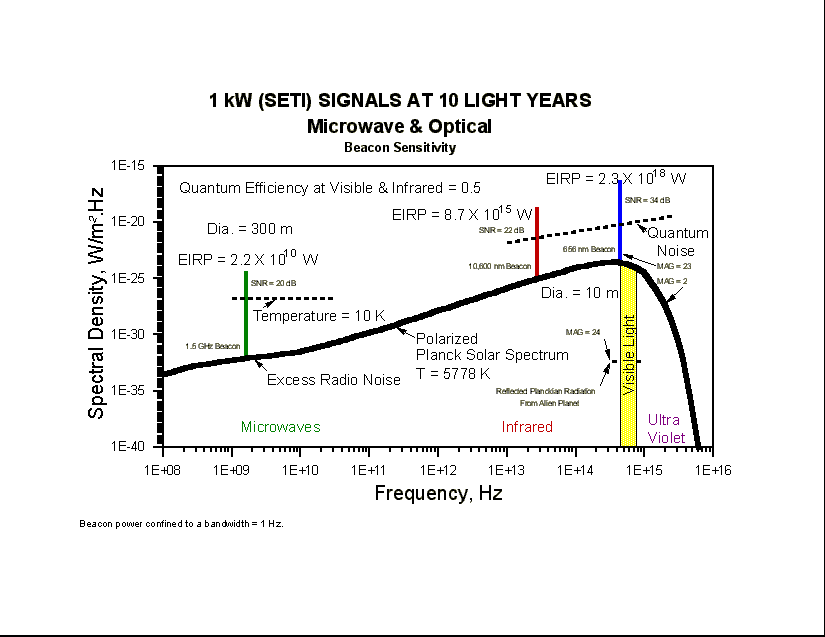
Other than the fact that interstellar absorption at microwave frequencies for distances in excess of a few thousand light years is significantly less than in the visible spectrum, the Microwave Cyclops system has little to commend it for communications within the solar neighborhood, particularly as the cost of the receiver is about two hundred and fifty times that of a single-aperture ground-based optical counterpart. This is good grounds for thinking "small is beautiful". For some strange reason, while free-space laser communications appears to be fine for future terrene GEO (Geosynchronous Earth Orbit) to LEO (Low Earth Orbit) and deep-space communications (much of this work is being coordinated by NASA79-89, see Jim Lesh's paper elsewhere in these proceedings), the SETI community appears to be convinced that ETIs would not use such technology for interstellar communications! This is illogical. A presently favored operating wavelength for terrene free-space communications systems is 530 nm (green), obtained by frequency-doubling the 1,060 nm wavelength produced by a laser-diode pumped Nd:YAG laser. As previously mentioned, terrene SETI programs appear to have been distorted by poor assumptions in the Cyclops Study (Table 1).5 As we showed earlier, the efficacy of the optical approach was severely hampered by constraining the near-infrared transmitting telescope size to 22.5 cm. It boggles the mind to think that ETIs would be trying to contact us with their equivalent of a Celestron or Meade telescope. This would put the onus on us to build very large and expensive multi-aperture receiving telescopes to pick up their weak signals; surely the very opposite would be the case! The Cyclops study was unable even to predict the rise in ascendancy of the ubiquitous semiconductor chip over the following five years, and the effect it would have on SETI signal processing, even though integrated circuits were being developed in the editors' (Barney Oliver & John Billingham) backyard! Since the overall performance of symmetrical systems is proportional to the telescope diameter raised to between the sixth to eighth power (allowing for power density limitations due to heating effects at the transmitter mirror), poor estimations about transmitting and receiving telescope apertures can drastically skew a comparative systems analysis. In practice, transmitting and receiving telescopes are likely to be extremely asymmetric. If we do discover an optical ETI signal in the next few decades, it will probably be found to have been transmitted by a huge optical array, while our receiving antenna will be a relatively puny telescope. Figure 2 is a graph of received signal spectral density, superimposed on the Planckian spectral density curve for a (solar-type) black body radiator at a temperature of 5,778 K. It is based on the data in Table 2, except for the fact that the microwave system modelled corresponds to a 300-meter diameter dish instead of a 100-meter diameter dish. As a reference performance criterion, a symmetrical microwave system based on the 300-meter diameter Arecibo radio telescope on the island of Puerto Rico, a 1 kW transmitter and a 10 K system temperature, would produce a SNR of about 20 dB re 1 Hz. This produces a CNR some 19 dB greater than for the 100-meter radio telescope system modelled in Table 2. The EIRP of the solar-type star = 3.9 X 1026 W, and has an apparent magnitude equal to 2.2. A preferred wavelength, not shown in this table, might be 1,060 nm, corresponding to the Nd:YAG transitions in the near-infrared. The corresponding SNR for a 10-meter diameter 1,060 nm system is 32.1 dB, as compared to the 34.2 dB obtained at 656 nm.
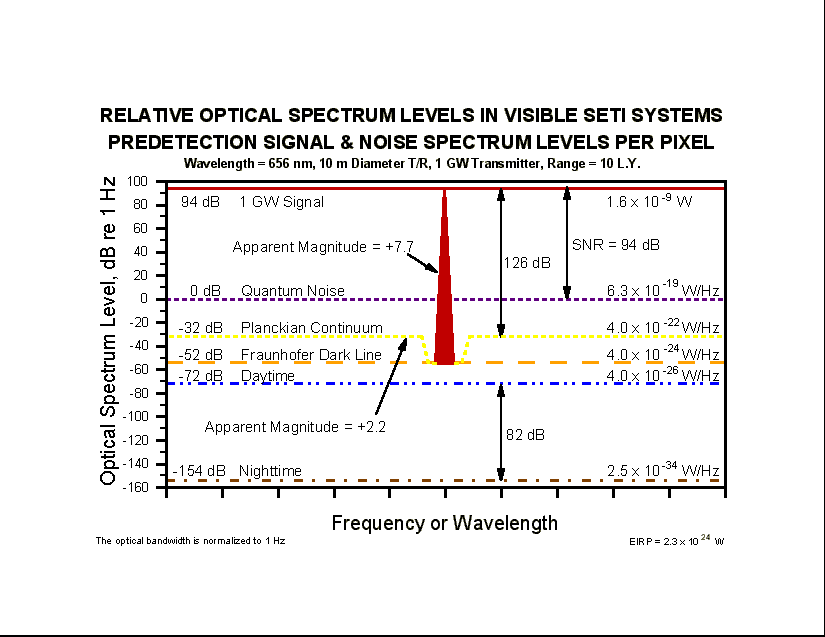
The reader is encouraged to compare this graph to that given in First Contact26 (Chapter 4, Page 151, by Dr. Michael Klein). The first impressions from that graph (Figure 1 of Chapter 4) is again that optical communications are useless. This is far from the truth. Indeed, the graph is very misleading. One might be forgiven for thinking that in this model, the ETIs are using Compact Disc-type laser-diodes and/or hobby model-type telescopes! The assumed optical EIRPs are much too low. Also, the graph is plotted in terms of EIRP, and therefore exaggerates the efficacy of the microwave approach for an electronic receiver (instead of an observer), because it does not show the typical 10 K noise floor of a high-quality microwave receiver, only the radio brightness of a quiet G-type star. The latter is about 54 dB beneath the 10 K systems noise floor, as shown in Figure 2, and could only be detected after considerable signal integration. At 1.5 GHz, it is generally the Cosmic Background, i.e., the 2.73 K aftermath of the theoretical Big Bang, and the electronic noise in the microwave front-end that limits signal detectability, not Planckian radio noise from the star. Figure 3 is a graph of spectral levels based on the previous parameters but with the ETI transmitter power increased from 1 kW to 1 GW. The quantum noise floor has been taken as a reference level, so that the available SNR can be more easily illustrated. The CNR = 94 dB re 1 Hz, and the Planckian continuum background noise is 32 dB below the quantum noise. Thus, the stellar background has no effect on SNR. If the bandwidth is increased to 30 MHz, to accommodate analog F.M. TV transmissions, then the CNR falls to 19 dB, which is about 10 dB above the F.M. threshold. So, as indicated earlier, this signal is more than adequate to maintain real-time NTSC/PAL/SECAM TV signals over a distance of ten light years.
The thing to really appreciate here is the visual brightness of this transmitter. The apparent visual intensity of the 1 GW transmitter, the power output of a typical Twentieth Century terrene power station, would rise from an apparent magnitude of +22.7 to +7.7. This is still below unaided human eye visibility (sixth magnitude) even if not obscured by the light of its star, and amounts to only 0.62% of the star's visual intensity when not corrected for wavelength, and less than 0.1% when corrected for wavelength. This result demonstrates that references in the literature to the fact that such signals have never been seen by the unaided eye, or detected in low-resolution spectrographs, proves nothing about whether ETIs are transmitting in the visible spectrum. Simply put, a powerful communications signal is still weak compared to a star's (integrated over wavelength) output radiated in our direction. There are many laser wavelengths in the visible and infrared spectrums that might be suitable for ETI transmitters and local-oscillators. We should not discount the possibility that ETIs may use efficient frequency-doubled lasers, so we might consider exploring the visible spectrum for near-infrared lasers at half their fundamental wavelengths. Carbon Dioxide (CO2) and Semiconductor lasers are very efficient. As previously mentioned, the CO2 wavelength of 10,600 nm has been identified as an "optical magic wavelength".49-50,59-61,66 There are a variety of chemical lasers, including: Iodine, Hydrogen Bromide, Xenon Hexafluoride, Uranium Hexafluoride, and Sulphur Hexafluoride. These chemical lasers are efficient and very powerful. Lasers like the Helium-Cadmium and Helium-Neon can be discounted because of their very poor efficiency and low power, even though their temporal coherence is excellent. Then there are the Argon-Ion lasers which are still relatively inefficient. Probably, one of the more important considerations for an ETI transmitting laser is that it should be capable of being deployed in space or on an atmosphere-less planet, be able to produce extremely high cw or pulse powers, and be nuclear or stellar (solar) pumped. It is possible that there may be a "popular" ETI laser wavelength with which we are not familiar. With respect to heterodyne receivers, organic dye lasers are suitable for local-oscillators, with their wide tunability and narrow linewidth (< 5 kHz). Lead-salt semiconductor lasers are suitable for infrared local-oscillators.
Table 3 shows the projected performance data for a 10-meter diameter telescope with incoherent receiver. This is a large telescope version of Table 1 given in the companion paper73 for a 25.4 cm diameter telescope. The system employs incoherent photodetection, but will use different receivers; one being optimized for low-bandwidth continuous wave detection and the other for wide-bandwidth pulse detection. Some of the nomenclature for this table will be repeated here for convenience; refer to the AMOSETI paper for further details.73 Lines "a" to "c" are projections for detecting a cw optical carrier or a cw subcarrier modulation of the optical carrier. This signal could be the ETI "beacon" so favored by SETI lore. Lines "d" and "e" are estimations of the detectability of 1 ns beacon pulses, transmitted at one second intervals. Lines "f" to "l" are the performance projections for various digital modulation schemes employing Pulse Position Modulation (PPM).55,57,71. The 10-meter telescope of Table 3 has a gain of 32 dB with respect to the 25.4 cm Meade of Table 173, so that the post-detection SNRs generally differ by 32 dB, except where dark-current and background noise limits the SNR. For a 1 Hz post-detection bandwidth, the 1 GW signal (line "c") will produce a SNR = 83 dB. This is about 11 dB less than was calculated for the professional heterodyning system. A total of 8.5 dB of this difference for this shot noise limited receiver is accounted for by the more conservative approach of including the effects of atmospheric transmission, telescope efficiency and spectrometer efficiency. The other 3 dB is due to the fact that the basic SNR of a heterodyne system is 3 dB more than for a quantum noise limited direct detection receiver. Below transmitter powers of 1 MW (line "b"), the receiver becomes kT or dark-current noise limited, so the SNR falls by more than 30 dB for a further 30 dB decrease in transmitter power to 1 kW (line "a"). It should be clear from Table 3, assuming the advanced technical prowess of ETIs in producing powerful cw and pulsed laser transmitters, that the cw and single-pulsed SNRs (line "d" and "e") are adequate to allow detection by 10-meter diameter receiving telescopes. It can be seen that cw SNRs are more than large enough to allow for the successful demodulation of intelligence for low bandwidth modulation. The pulsed scenarios of "d" and "e" would be easily detectable and could constitute a "pulsed beacon". For the digital systems, signal levels for the scenarios "f" to "l" are generally of sufficient intensity to allow detection with near error-free or error-free demodulation. The number of photons required per bit of information is often taken as a measure of the quality of the communication system. For scenario "g", the number of photons required per bit is 2. Note that for the pulsed systems, the background radiation count due to the extra-solar background in a 100 GHz (0.14 nm) optical bandwidth is essentially negligible, i.e., 1.0 X 10⁻² counts per ns for the 10 meter diameter telescope. Thus, speculating these high EIRPs, optical bandwidths can be made significantly larger than 100 GHz without impacting the SNR and Bit-Error-Rate (BER). Conventional low-cost interference filters of 10 nm bandwidth would not impact the SNR or BER. Indeed, the optical bandwidth could be increased substantially above 100 nm before significant degradation occurred in the scenarios with positive SNRs. This is a major advantage over the cw approach and it also significantly cuts down the search time. If counting is done during short time intervals, it is much easier to make the effect of dark current insignificant, since as with stellar background radiation, the noise count during the short pulses will be very small, e.g., 2 X 10⁻⁸ counts per nanosecond time slot. Since photon counts are 390 counts per pulse for the "k" scenario of Table 1, it can be seen that this level of dark-current can have no effect on SNR and BER. The scenario of line "h" indicates that a 128 M-ary PPM transmitter of 1 GW mean power could send a detectable signal with a data rate of 55 Mbits/s, albeit with little error. The SNR of 23 dB obtained for the 1 MW "k" pulsed system indicates that even very modest laser transmitters and terrene receivers could sustain 36 kbits/s communications across nearby interstellar space. For line "l" in this table which shows a SNR = 53 dB, the number of photons per bit for SNR extrapolated to 20 dB and a BER < 10-8 is about 10. Table 3 indicates that error-free detection of data rates in excess of 10 Mbit/s may be possible with a 1 GW mean power transmitter and a 10 meter aperture receiving telescope over a range of 10 light years! This would allow for the transmission of a compressed video signal.113 In that respect, it has a similar communication capability as that of the 1 GW frequency modulation (FM) scheme modelled for the professional heterodyne receiver with a 30 MHz I.F. bandwidth (see Figure 3).
Wavelength = 656 nm Shaded areas denote undetectable
signals, i.e., negative SNRs, or insufficient bandwidth (IB).
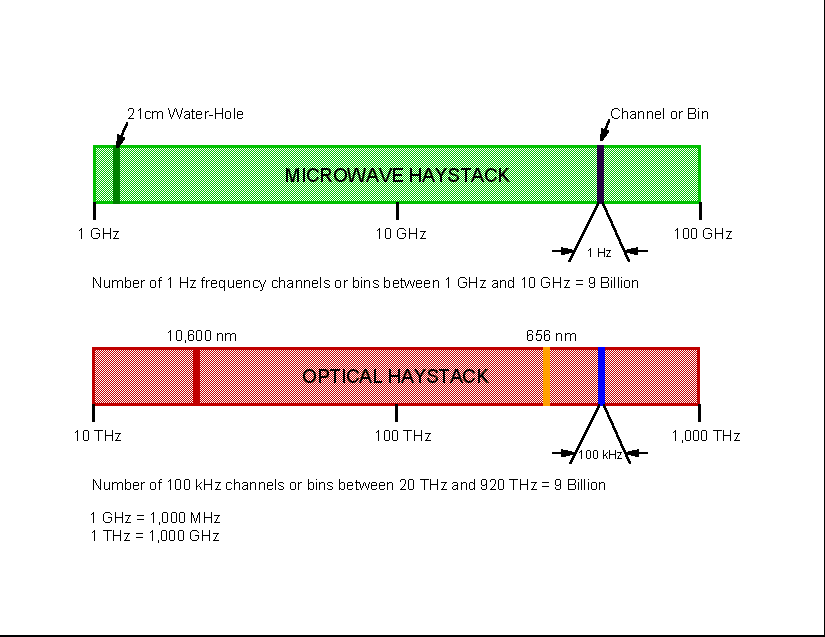
5. THE OPTICAL SEARCHAn "All Sky Survey" of the type planned for the High Resolution Microwave Survey (HRMS) Project, which pixelizes the entire celestial sphere, does not make sense in the optical regime.41-48 The 1016 beams for a diffraction-limited 10-meter diameter visible-wavelength telescope are mainly wasted looking out into empty (local) space. For a celestial sphere one thousand light years in radius, containing one million solar-type stars, the average angular separation between stars is 0.23 degrees. A 34-meter diameter radio telescope at 1.5 GHz has a typical field-of-view (FOV) of 0.41 X 0.41 degrees, and thus, on average, its FOV encompasses several stars. It is efficient when conducting a radio "All Sky Survey" to continuously scan the celestial sphere in consecutive or adjacent strips or sectors. That said, it will be noted here that if our new OSETI lore would have us search for high intensity pulsed beacons, then it may be possible to attempt an Optical All Sky Survey with non-diffraction limited telescopes, i.e., with "light-buckets", in a more reasonable amount of time. The 10-meter diameter Professional 656 nm Optical SETI Telescope would have a typical FOV = 0.33 X 0.33 degrees and a 128 X 128 photodetector array FOV = 2.1" X 2.1". Since the average separation between the 1 million stars seen looking through a sphere 1,000 light years in radius, is 0.23 degrees, the average number of stars in the optical array FOV is 6.4 X 10⁻⁶. Thus, the narrow diffraction-limited field-of-view means that for most of the time the optical detector(s) would be viewing empty space. A similar situation prevails for the smaller, single detector amateur optical telescopes discussed in the companion paper.73 The argument has been advanced by Dr. Bernard Oliver, in correspondence with the author, that because an "All Sky Survey" would be out of the question at optical frequencies, this implies that ETIs would not use these frequencies. The author's response to this is that there is nothing "holy" about the "All Sky Survey" approach. What we may wish to do is to have a Targeted Search of tens of thousands of stars, instead of a mere eight hundred as presently planned for HRMS. However, each time we wish to scan another star in the frequency domain, we will move the telescope to an adjacent sector of the sky that contains the desired object. While there is the possibility that ETI transmitters exist in the interstellar voids, far from their home stars, the author thinks that this scenario is unlikely (except perhaps within our own solar system, i.e., von Neumann-type probes), if for no other reason than it would place the energy-intensive transmitters far from a "cheap" and plentiful energy source. One of the many objections made to the optical approach to SETI is that there are just too many frequencies to search. Even under the author's cw rationale, this is more a perception than a reality because of the wider signal bandwidths assumed. The number of frequencies to search in the microwave and optical haystacks are of similar magnitude, as illustrated in Figure 4. Wide bandwidth means that laser linewidths, Doppler shifts, and chirps (drifts) are less significant, and the number of frequencies to search in the optical spectrum is more manageable. Just because visible frequencies are over five orders of magnitude higher than microwave frequencies does not mean that there are over 105 more frequencies to search in the optical frequency domain. The modulation bandwidth of proposed optical ETI signals as a percentage of the carrier frequency may be as large or larger than the percentage modulation bandwidth of proposed microwave ETI signals. In fact, assuming minimum bin bandwidths of 100 kHz, the number of frequencies to search in the entire optical spectrum may not be much greater than the number of 1 Hz frequencies between 1 and 10 GHz, i.e., nine billion! This too has important ramifications in terms of the search time.
The reader should note that for a drifting carrier signal, i.e., one subjected to Doppler Chirp, the optimum detection bandwidth is equal to the square root of the frequency drift rate.5,8 This assumes that the local-oscillator laser is not de-chirped. Thus, the optimum bandwidth for a monochromatic 1.5 GHz signal drifting at a local Doppler Chirp rate of 0.17 Hz/s (see Table 1, Line 30) is about 0.4 Hz, while for a monochromatic 656 nm signal drifting at 51 kHz/s, the optimum bandwidth is 226 Hz. If the bin bandwidth is excessive, too much system noise is detected, and the CNR is degraded. On the other hand, if the bin bandwidth is too small, the response time of the filter (approximately 1/Bif) is insufficient to respond to all the energy in the signal as it sweeps by, again leading to a reduction in CNR and detectability. The time that would be required at visible wavelengths for both an All Sky Survey and a Targeted Search has been estimated. With a 100 kHz minimum bin bandwidths, a 128 X 128 array would take 0.164 s to scan. If we assume no scan dead time, then to scan the entire visible band between 350 nm and 700 nm at a sensitivity level of about -150 dBW/m2 (10-15 W/m2), would take about two hours. An All Sky Survey of this type would take at least 136 million years! If a survey of this type could have been started when the dinosaurs roamed Earth, we would be just about reaching the end of the first scan! (Don't anyone accuse the author of lacking a sense of humor). On the other hand, for a sensitivity of -150 dBW/m2, a Targeted Search scan of a single star over the 280 GHz effective bandwidth of the 656 nm Fraunhofer line with a 10 GHz MCSA, with on-line data storage, and a 10 m s pixel sampling time, would take 4.6 seconds. This is a very reasonable time, so that a slower scan at selected laser and Fraunhofer lines could be performed to reduce the minimum detectable flux levels.
6. PROFESSIONAL CO2 SETIAlbert Betz and Charles Townes are involved with the only observational Infrared Optical SETI work presently being done in the United States, or anywhere for that matter, and is supported by a NASA grant NAGW-681.66,70 This low-profile SETI work is being done on Mount Wilson, and is piggy-backed onto a much larger NASA program to investigate astrophysical phenomena at the galactic center, e.g., a possible black hole. See Charles Townes' paper in these proceedings.70 Earlier it was stated that the minimum beam divergence thought possible by Townes and others was about one second of arc. However, a more recent paper by Betz indicates a new, more optimistic limitation of about 0.1 second of arc. This is only a factor of 7.25 greater than the 0.0138" diffraction limited beamwidth for the visible system (as shown in Table 2, Line 5). By assuming that the nearest stars to be targeted are around 50 parsecs (163 L.Y.) away, a beam divergence of 0.1 arcsecond is compatible with the expected zones of life. Because of this increase in beam directivity, Betz gets an infrared SNR improvement over the 300-meter diameter Arecibo system of about 3 dB (a factor of 2). Figure 2 showed that the microwave system has a CNR of 20 dB, while the infrared system has a CNR of 22 dB; a 2 dB difference in favor of the infrared system. Thus, taking into account the slightly different assumptions made in this analysis, i.e., the transmission relationship, the microwave front-end temperature and quantum efficiency, the theoretical results for the CO2 system in this paper are in very close agreement with that of Betz's paper. The Townes and Betz CO2 telescope is computer driven, with the ability to point blind to approximately one arcsecond, both during the day and night. CO2 SETI is just as effective during the day as at night, since whatever the limitations of the sky background, it is essentially constant over the 24 hour day. While we are discussing CO2 SETI, it should be noted that Brent Sherwood in 1988 did a study of the use of Planetary Lasers for SETI transmitters.63 This NASA-sponsored M.S. engineering study, mainly concerned itself with problem of building CO2 lasers that would be solar-pumped and be placed in orbit about planets like Mars or Venus. The mirrors of the lasers would form a configuration similar to a ring laser, where a large part of the optical path passed through the atmospheres of these planets and where the lasers would pumped by the available solar radiation.
7. ADAPTIVE TELESCOPE TECHNOLOGYPerhaps one of the most exciting developments in modern optical astronomy is the subject of adaptive telescope technology.90-95 The author believes that this not only has profound implications for conventional optical astronomy but also for heterodyning Optical SETI. In particular, for what we call Symbiotic Optical SETI - the sharing of telescope facilities with conventional astronomy. Earth-based telescopic adaptive-optics systems need a reference (guide) star which is near objects of interest and bright enough to provide information on the wavefront distortion. But natural guide stars for a usable portion of the visible spectrum are few and far between. To create the artificial guide stars, a laser is beamed into the sky, which scatters back some of the energy. The laser energy creates Rayleigh backscattering in the stratosphere (10 - 40 km up) and resonance-fluorescence backscattering in the mesospheric sodium layer (80 - 100 km). For zenith viewing of a 20-cm atmospheric patch using the Rayleigh approach, the laser must put out 82 watts; for the sodium-backscattering approach the required exciting power is 14 watts. At the sodium layer, the beam must be 0.5 meter in diameter, with a pulse rate of 100-200 pps and 100 millijoules per pulse. The laser guide-star concept was first put into practice by Chester Gardner and Laird Thompson, who in 1987 created, photographed, and measured their own glowing beacon, shot like some giant flare above the Mauna Kea Observatory in Hawaii.91,95 The basic system requirement is that the distortion of the guide star must be measured and the adaptive mirror adjusted in the time it takes for a star to twinkle, or, depending on how you look at it, the time between twinkles. This window of visibility known as twinkle time (also called scintillation coherence time) is open for a scant 10 ms. The requirements to produce a diffraction limited image over the entire focal image plane are rigorous. It could be that the criteria for Optical SETI are rather less demanding. The requirement here is for imaging the ETI signal onto a two-dimensional photodetector array, where the primary purpose (neglecting Planckian suppression needs) of the array is to detect ETI photons, not to produce a super high-quality extended image. Note that the "pilot-tone" described earlier would allow efficient detection of an ETI signal with a simple passive technique, if ETIs cooperate by transmitting a signal accompanied by such a pilot-tone beacon. Such a technique automatically makes any telescope with multiple photodetectors adaptive, without the need for deformable mirrors and laser guide stars! A way to get large apertures with smaller mirrors could be a design based on the Multi-Telescope Telescope (MTT).118 This approach would be most useful if an incoherent receiver is employed, for then the photons from each mirror could be combined with fiber-optics and taken to a single photo-detector. This technique is applicable to Optical SETI, because except for coherent detection systems, we may not be interested in obtaining a "perfect" image; just the maximum number of photons.
8. LIST OF PREVIOUS AND PRESENT OPTICAL SETI OBSERVATORY ACTIVITIESThe following material has been extracted from a comprehensive list on all modern-day SETI activities so far, and was prepared in October of 1991 by Dr. Jill Tarter of the SETI Institute. Dr. Tarter lists sixty three different SETI observing programs, starting with Project Ozma in 1960 at the Green Bank National Radio Observatory in West Virginia, to Harvard University's microwave search of Messier M31 and M33 from the Oak Ridge Observatory. This list also includes the 1983-1984 Amateur Microwave SETI program organized by Dr. Kent Cullers, which used Silicon Valley Hams with their satellite TV dishes (TVROs). Of this list of sixty three observing programs, only three were or are concerned with Optical SETI, and these optical programs are listed below. In 1992, the number of Optical SETI observation programs amounted to less than 5 percent of all SETI programs. In actuality, the ratio is nearer 3 percent because Shvartsman's two programs can be considered as one. This supports the author's contention that Optical SETI has suffered benign neglect. Now with the new Argentina "MANIA" Observatory at CASLEO72 and the Optical SETI Observatory in Columbus73 coming on-line this year, the number of OSETI programs has jumped from 5 to 8%!
9. DISCUSSIONThe work reported here is described in much greater detail and supported by extensive calculations in the original EJASA68 article on Optical SETI which was published on the Internet. See the Preface for details on how to obtain a copy. The theoretical results quoted in this paper are based on standard text book relationships, familiar to students of electrical engineering, physics, and astronomy. Please refer to Appendix A of the EJASA article68 for a list of most of these formulas and specimen calculations. Perhaps the main reason for the difference between the conclusions of this analysis and many previous comparative SETI analyses, is that the author has shown a bit more imagination. SETI would not seem so mysterious to the average person if it was recognized that this is yet another communications problem, albeit complicated by the fact that we do not know where or when to look, the transmission frequency, the bandwidth, or the modulation format. In many ways it is just another aspect to our manned and unmanned space program, but one that has received relatively little funding. It took many years before SETI was recognized as a legitimate science and not pseudo-science. The technology described here for Optical SETI is more than just a means of contacting emerging technical civilizations. If intelligent life is not uncommon in the galaxy, and if electromagnetic waves are still the primary means of interstellar communications, the ability of optical relays to form a galactic network might obviate the necessity to use low-loss microwaves or the far-infrared in order to propagate across the entire galaxy in one go. After all, it is very difficult to have a snappy conversation when communicating over one hundred thousand light years! Although microwave carriers could convey wide-bandwidth signals like video over interstellar distance, interstellar dispersion may make this difficult, particularly in the galactic plane. While it is true that a conventional video signal consumes a trivial percentage bandwidth even at low microwave frequencies, the ability to successfully detect PPM signals with nano-second duration pulses that really stand out above the background would be compromised by excessive dispersion. Such a bit-stream would occupy bandwidths approaching 100% at low microwave frequencies, presenting a severe detection and demodulation problem, notwithstanding the issue of pre or post-compensation of significant interstellar dispersion at microwave frequencies. However, since we have argued here for the superior technologies available to ETIs, it would not be out of the question for them to overcome the microwave dispersion problem, if they so wished. Earlier, we showed that our "perfect" 10-meter diameter symmetrical 656 nm heterodyning system was capable of yielding over a range of 10 light years, a CNR of about 34 dB re 1 kW re 1 Hz, for a diffraction limited EIRP of 2.3 X 10¹⁸ W (see Table 2 and Figure 2). Since a solar-type star has an EIRP of 3.9 X 1026 W, we pose the question: What is the communication capability of such a communications link when the mean EIRP of a large transmitter array is 2.5 times that of the star, i.e., when the mean EIRP is about 1027 W? This condition corresponds to the transmitter appearing as a 1st magnitude object; a situation which would produce a noticeable (2.5 times) brightening of the ETIs' star. Since the ratio of EIRPs {1027/(2.3 X 1018)} is 4.4 X 10⁸, the CNR will be improved by 86 dB, resulting in a CNR of about 120 dB re 1 Hz, and a photon detection rate of about 1012 s-1. If the bandwidth is increased to 10 GHz, the CNR falls to about 20 dB. Thus, this just naked-eye noticeable transmitter would be capable of sending a 10 Gbit/s data-stream across 10 light years with low BER. This would allow a hypothetical Encyclopedia Galactica to be uploaded or downloaded rather efficiently! The thirty-year-old rationale which would have us believe that the low frequency end of the microwave regime is the place to search for ETI signals is seriously suspect. If the underlying assumption of present-day SETI lore that the best ETIs could do would be to send us very weak low bandwidth signals is swept away, then almost all the so-called problems that are usually advanced to dismiss the optical approach become insignificant. This is even more so if the use of optical heterodyne reception is assumed or the incoherent detection of pulses. The increased immunity of such systems to background noise means that the signal detectability constraints set by Planckian starlight are essentially removed. In addition, with dechirping of the local-oscillator to remove local Doppler drift along the line-of-sight, problems from local Doppler drift in heterodyning receivers are eliminated. Because of the very narrow field-of-view of a photodetector array, Doppler drift compensation can be made simultaneously to all pixels in the array to a very high degree. The larger bandwidths mean that the effects of finite laser linewidths, Doppler shift and residual drift are minimized, and the number of frequencies to search in the entire optical spectrum is in reality no more than in the microwave spectrum. Up to now, the SETI community has taken some comfort in the fact that the obvious explanation as to why we have not detected ETI signals is simply that they are too weak and that we need sophisticated hardware and signal processing algorithms to extract this information. An even simpler explanation for the lack of success so far is that there are strong signals but they are elsewhere in the electromagnetic spectrum. Free-space optical communications will be a mature technology for any spacefaring civilization. It seems reasonable to assume that they will spinoff this technology for SETI transmitters should they wish to contact emerging technical civilizations. The fact that optical magic frequencies are hard to identify at this time, save for 10.6 m m, is not an argument that such frequencies do not exist. Perhaps the only reasons for ETIs to build very large microwave arrays would be to eavesdrop on radio frequency leakage from primitive technical civilizations (like us), to beam microwave power, for astrophysical research, or to communicate with other galaxies. Even this author has some problems in believing that the civilizations of extraterrestrials would be so altruistic and long-lived to attempt electromagnetic communications across the intergalactic voids. The interstellar eavesdropping scenario is also problematic, as it is likely that a developing technical civilization only produces substantial radio frequency leakage for a short period in its history. In time, other technologies like fiber optics will replace high-power radio and TV transmitters, and military radar systems will be decommissioned. For this reason, if we attempt eavesdropping with large radio frequency antennas ourselves, failure to detect such signals may not imply very much about the existence or lack thereof of ETIs. Thus, if the HRMS does not detect ETI in the next decade, we should not jump to the conclusion that we are alone in the Milky Way galaxy. On the other hand, some civilizations may be continually threatened by cosmic catastrophes in the form of bombardment by planetoids. These races may have instigated powerful radar early warning systems for planetary defense purposes, and these may eventually be detected. We cannot even be sure that ETIs would want their signals to be detected within an atmosphere or otherwise too easily. These are prevalent assumptions among most SETI proponents. There might be logical reasons for ETIs to think that only when a technical civilization begins to "emerge" from its planet would it be truly mature enough, and in a culturally receptive frame of mind, to receive signals from ETIs. Thus, the recipients' atmosphere itself might be used as an automatic protective blanket to avoid cultural shock. In a way, the electromagnetic search for ETI is one of the greatest hunts and detective stories ever. Unfortunately, there are still so few clues.
10. CONCLUSIONSThe author feels that it is still an open question as to what are the optimum electromagnetic frequencies for interstellar communications - the jury is still out as to whether ETIs are signalling with low-energy microwave photons, or with high-energy optical photons. What the author will say, is that he feels a strong case has been made in this paper for the SETI community and NASA to review their present attitude towards the optical approach. This does not mean that the High Resolution Microwave Survey (HRMS) Project should be abandoned or severely modified, since clearly we need to do a exhaustive search in the microwave spectrum. Some of the signal processing techniques developed for HRMS may also be applicable to the optical search. In many ways the Cyclops Report5 may have become the cornerstone upon which much of present-day SETI lore rests. While the report itself was a very comprehensive study of Microwave SETI, and of high technical quality, certain very conservative assumptions in that study causes this author to consider the report flawed. Sweep away the inherent anthropocentric Assumption of Ineptitude of present SETI lore and the problems associated with the optical approach disappear. Planning for an extensive optical search should be started now, so that if by the year 2000 the results of the HRMS are negative, as the author believes it will be, we can immediately initiate Professional Optical SETI activities. This would be a natural extension to HRMS. In the meantime, amateur astronomers73 could be conducting a low-level (low-sensitivity) optical search, helping to establish some ground rules for a later high-sensitivity professional optical search. It is believed that Professional Optical SETI with large heterodyning or photon-counting telescopes is compatible with Professional Optical Astronomy in that they can share most of the hardware, yet be undertaken at different times so as not to interfere with each other's observations. There is theoretical and experimental evidence to suggest that the new adaptive telescope technology using Rayleigh or Sodium Resonance Fluorescence laser guide stars91 can be made to work during daylight hours. This clearly has important ramifications for the concept of Symbiotic Heterodyning Optical SETI. The idea of modifying Earth's Great Optical Telescopes for Symbiotic Professional Optical SETI has many attractions; where the scientific endeavors of conventional and SETI optical astronomy could be of mutual benefit to each other. There is probably a case here for an automated retrospective historical study of stellar spectrographic plates to see if ETI signals actually exist and are on record. It is quite possible that anomalous spectral lines will be found in the record, signifying laser transmissions, but which had previously been overlooked, fogged the film, saturated the recording media, been mistaken for natural bright emission lines, or put down to "technical problems with the spectrographic equipment". It would not be the first time that a major scientific discovery had been missed for lack of attention and curiosity. There does appear to be some doubt as to whether cw ETI signals, if present, would have been accidently detected during conventional optical astronomy and recognized for what they were. Clearly, there would be very little likelihood of accidently detecting fast pulses. It is left as an exercise for others to determine the probability of missing an ETI signal at any particular continuous wave flux level. It is the very concept that ETIs are supposed to be rare which makes it plausible to suggest that the historic accidental discovery of ETI by optical astronomers would be unlikely. Initially, to reduce the optical search time, we would concentrate on efficient laser transition frequencies presently known to humanity, and Fraunhofer dark lines. It is suggested that we must keep an open mind here. For thirty years we have been digging relatively deep trenches in a very small corner of our electromagnetic backyard. Was it prudent to do this without at least turning over the topsoil in the rest of the electromagnetic garden, particularly in that part of the spectrum where solar output peaks, and which tells us and ETIs most about our Universe? During the next few decades, other lights (visible and near-infrared) will appear in the sky of terrene origin: they will be the advanced laser communication systems of GEO and LEO satellites, along with signals coming back to Earth from NASA's next generation of deep space probes.79-89 Sometime next century, humans will be seen walking on the planet Mars. These HDTV television signals are likely to traverse most of the distance between Mars and Earth via laser, be relayed around the globe via laser-based geosynchronous satellites, and arrive in people's home via optical fiber. When humanity sends out (non-relativistic) interstellar probes to investigate nearby star systems, the data and pictures of those encounters (hopefully with other planetary systems) will come back to Earth via laser. The computer technology of the day will also be substantially dependent on lasers. The author has seen the future, and it is photonic!96-108 Truly, the superior communications and computing technology of the future will be photonic, a technology that is likely to be around for a while. Indeed, in the future, one of the main uses for low-gain microwave space communications might well be the "acquisition" of the party at the other end of the link, so that the high-gain laser communications system can be locked on! The Amateur Optical SETI enthusiast (see the companion paper)73, with the right photonic receiving equipment, will be able to tune in on these Earth-bound optical transmissions. How ironic, that next century the complaint will surely arise, that terrene optical transmissions are interfering with our ability to carry out Optical SETI free of false alarms! Now where have we heard that before? From this paper, the reader may have obtained the impression that there is a major controversy here between MSETI and OSETI proponents. In reality, despite the media and public perception, there are many in the MSETI community who do believe that the case for the optical approach to SETI has considerable merit. The problem is that these people are being very quite about it, having had enough trouble keeping the SETI flame alive and convincing people that the electromagnetic search for extraterrestrial intelligence is real science! Readers are reminded that there is little which is innovative about the contents of this document which have not previously been described by Charles Townes49-50,106 and others - the author has just been a bit more forceful. Mind you, it is true that this author is rather more "optimistic" about the EIRP levels that ETIs can produce, than most of his Optical SETI colleagues. Innovative ideas, like good wines, take time to mature. The author hopes that the effort he has expended in this revisiting of the optical approach to the search for extraterrestrial intelligence, will at last cause Optical SETI to be seriously considered by the scientific community as warranting closer study. This might give new meaning to Arthur C. Clarke's "Extra-Terrestrial Relays", which in the October, 1945 issue of Wireless World, described the basic idea for the present terrene geostationary (the Clarke Belt) satellite system.78 That article was written when the word "extra-terrestrial" had another, more down to earth meaning. Clarke had originally given his article the title "The Future of World Communications". Perhaps this paper should be titled "The Future of Interstellar Communications"? This and the companion paper73 could be the start of an exciting new chapter in both SETI and professional/amateur optical astronomy. One thing which can be said for certain, is that should a professional or amateur astronomer discover electromagnetic (radio or optical) signals from ETIs, neither they nor humanity will ever be the same. Perhaps now is the time to get familiar with those Post-Detection SETI Protocols!25 See the special appendix at the back of these proceedings for a description of these protocols.
11. ACKNOWLEDGMENTSThe author would like to thank Robert Arnold of the SETI Institute and Dr. Robert Dixon of Ohio State University, for the assistance he has received during the past three years since first becoming professionally involved with SETI. He would also like to acknowledge the encouragement of Dr. John Billingham, Chief of NASA's SETI Office, and the recent conversion of Professor John Kraus, Director of OSU's Radio Observatory to the cause; not that the latter is giving up on "Big Ear"!
12. REFERENCES
| |||||||||||||||||||||||||||||||||||||||||||||||||||||||||||||||||||||||||||||||||||||||||||||||||||||||||||||||||||||||||||||||||||||||||||||||||||||||||||||||||||||||||||||||||||||||||||||||||||||||||||||||||||||||||||||||||||||||||||||||||||||||||||||||||||||||||||||||||||||||||||||||||||||||||||||||||||||||||||||||||||||||||||||||||||||||||||||||||||||||||||||||||||||||||||||||||||||||||||||||||||||||||||||||||||||||||||||||||||||||||||||||||||||||||||||||||||||||||||||||||||||||||||||||||||||||||||||||||||||||||||||||||||||||||||||||||||||||||||||||||||||||||||||||||||||||||||||||||||||||||||||||||||||||||||||||||||||||||||||||||||||||||||||||||||||||||||||||||||||||||||||||||||||||||||||||||||||||||||||||||||||||||||||||||||||||||||||||||||||||||||||||||||||||||||||||||||||||||||||||||||||||||||||||||||||||||||||||||||||||||||||||||||||||||||||||||||||||||||||||||||||||||||||||||||||||||||||||||||||||||||||||||||||